Archived copy of site from 2015
Mobile Robotics lives on as
RCI RoboCraft Innovation AB
Projects
Mobile Robotics has long experience in both leading and participating in different projects. Some examples are shown below and to the right. Some of the technologies and skills we can apply are:
- Programming
- C, C++, Labview
- Windows, Linux
- Atmel AVR
- User interfaces
- Internet, remote control, master/slave systems
- Embedded systems, hardware interfaces and FPGA
- User interfaces, video communication
- Control systems
- Hardware
- Mechanical design and production
- Electronics design - microprocessor systems, interface circuits
- Optronic systems
- Embedded computer solutions
- Motor control
- Hydraulic & pneumatic systems
- Project management
- Research experience
- Sensing technologies
- Range measuring lasers
- Scanning range measuring lasers, 2D & 3D
- Image processing/vision
- Structured light cameras (range cameras etc.)
- Ultra sound
- Motion tracking using reflectors/LEDs and cameras
- Standard industrial sensors
- GPS navigation
- Inertial (gyro, accelleration and inclination)
Medirob in BANITS-2
Our telemedicine solution for Medirob was developed as part of the BANITS-2 project with funding from Vinnova and Mobile Robotics. In Banits, which is part of
Celtic initiative, Medriob served as an advanced testbed driving the technology demands.preRunners - Mobile security robots research project
The preRunners project funded by FMV and Vinnova aimed to develop autonomous intelligent vehicles that work in constellations of at least two to provide secure and robust capabilities for recce, prerunners and patrol functions. Our role in the project was prototype design, embedded software and practical testing.
Load-Haul Vehicle Automation - prestudy
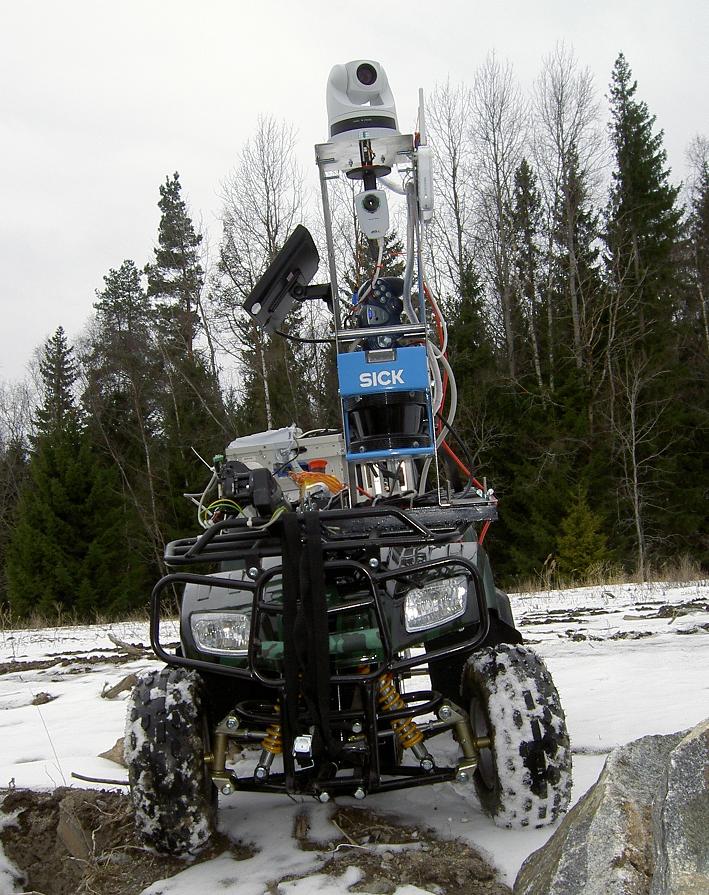
Many LHD vehicles etc are performing repetetive tasks well suited to automation. For indoor operations with fork lifts etc there are well established commercial solutions but for heavier vehicles and outdoor environments there are only narrow niche solutions available. Mobile Robotics has made a prestudy of the potential and the technological issues for this application and hope to be able to go forward with an actual end-user application in the future.
Plastering Robot
The autonomous plastering robot project started as a research project at Luleå University of Technology even before Mobile Robotics was founded.
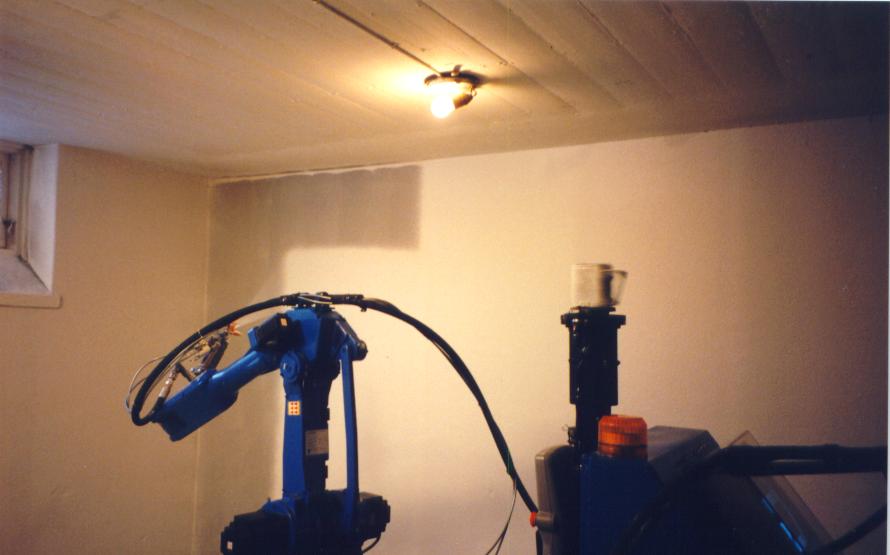
The aim of the project was to reduce the ergonomic problems and the costs for spray plastering of interior walls. The project resulted in an mobile robot with a robot arm for spray plastering and a range measuring laser scanner for positioning, measuring the dimensions of the room and the layout of windows and doors on the walls. The robot, shown below, worked well in tests but it never took of commercially.
However, the project started a cooperation that led to the founding Mobile Robotics Sweden!
Nuclear decommisioning
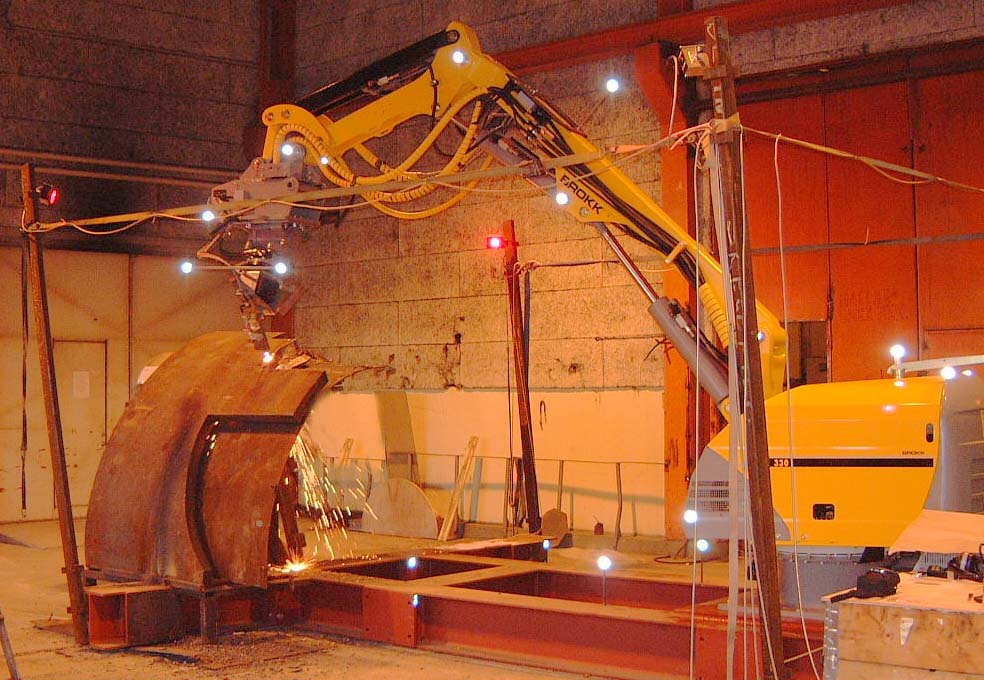
Together with Brokk AB and Luleå University of Technology Mobile Robotics developed an optronic control system for controlling the Brokk hydraulic arms automatically. A camera system tracks the positions of reflectors on the hydraulic arm and a computer control system controls the hydraulic actuators. The image blow shows the robot cutting steel.
Backfilling of deposition tunnels
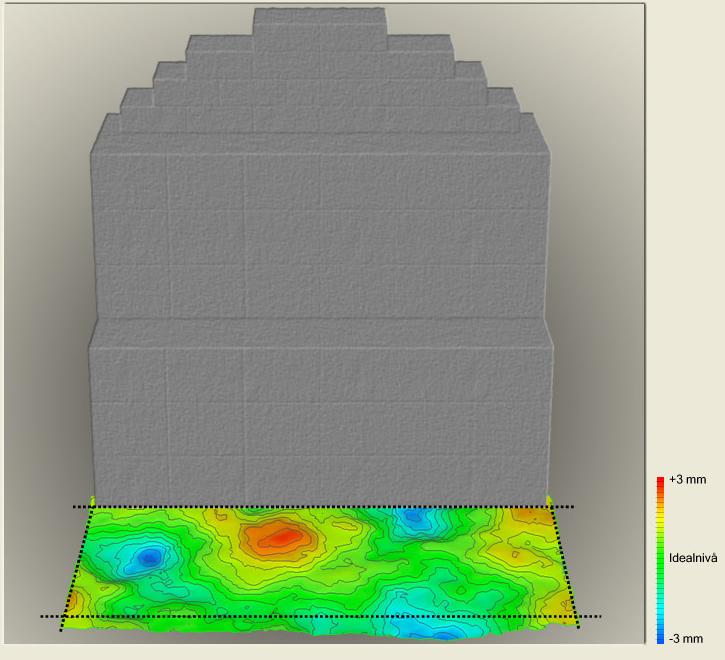
The planned final storage for Swedish nuclear waste is planned to be in deep undergound tunnels. To protect the waste the tunnels will be refilled with a special clay in a controlled manner. Mobile Robotics was commsioned by
SKB to make a prestudy of the measurement and robotic technologies needed and available to make this a reliable and welldocumented process.